

 See My Latest Article on HelloNation

Aging well is not simply about living longer. It also involves maintaining the strength, mobility, balance, and confidence needed to remain active and independent. Chiropractic care can support these goals by evaluating the musculoskeletal system, addressing movement limitations, and helping people manage certain types of pain conservatively.
Chiropractic care is not a cure for aging, and it cannot prevent every health condition. Its role is more specific: helping the spine, joints, muscles, and nervous system function as comfortably and efficiently as possible.
How can chiropractic care support healthy aging?
Chiropractic care may support healthy aging by improving joint movement, reducing musculoskeletal discomfort, and helping older adults continue safe physical activity.
A typical chiropractic assessment may consider:
- Spinal and joint mobility
- Posture and movement patterns
- Muscle tension and strength
- Balance and coordination
- Walking mechanics
- Activities that increase or relieve symptoms
- Health conditions, medications, previous injuries, and surgical history
This broader evaluation matters because pain is often influenced by more than one structure. For example, discomfort during walking may involve the lower back, hips, knees, feet, muscle strength, footwear, or balance. A careful assessment helps identify which factors may be appropriate for conservative care and which require additional evaluation.
Can chiropractic care help with stiffness and everyday movement?
It may. Joint stiffness is common with age, particularly after periods of sitting, reduced activity, injury, or arthritis-related changes. Chiropractic care can include gentle mobilization, soft-tissue techniques, stretching guidance, and exercises designed to improve usable range of motion.
The goal is not to force a joint beyond its comfortable limits. Instead, care is generally adapted to the person’s age, condition, tolerance, and functional goals.
Improved mobility may make ordinary activities easier, such as:
- Turning the head while driving
- Getting up from a chair
- Reaching into a cabinet
- Walking through the home
- Climbing stairs
- Carrying light household items
- Participating in hobbies or exercise
In the community, seasonal conditions can also affect movement habits. Cold temperatures, snow, and icy walking surfaces may lead some residents to spend more time indoors and become less active. A gradual return to regular movement after winter inactivity can help reduce strain and stiffness.
Does chiropractic care improve balance or prevent falls?
Chiropractic care may contribute to better movement awareness and joint function, but spinal adjustments alone should not be viewed as a complete fall-prevention program.
Fall prevention usually requires several parts:
- Leg and hip strengthening
- Balance exercises
- Walking practice
- Vision and footwear checks
- Medication review when appropriate
- Safer lighting and clear walking paths at home
- Attention to dizziness, numbness, weakness, or changes in coordination
A chiropractor may assess musculoskeletal contributors to unsteadiness, such as restricted ankle, hip, or spinal movement. Exercise recommendations may also focus on controlled transitions, posture, and lower-body function. However, repeated falls, sudden balance changes, fainting, new weakness, or significant dizziness warrant prompt medical evaluation.
For adults age 65 and older, regular activity commonly includes aerobic movement, muscle strengthening, and balance training. These categories work together. A person who only stretches may remain flexible but lack strength, while someone who only strengthens may still have limited mobility or poor balance.
What types of chiropractic care may be appropriate for older adults?
Care should be individualized rather than based on age alone. Older adults vary widely in bone health, joint condition, activity level, and medical history.
Possible approaches may include:
- Gentle spinal or joint mobilization
- Carefully selected manipulation when appropriate
- Soft-tissue work
- Postural and movement education
- Home exercises
- Stretching and mobility routines
- Ergonomic changes for sitting, sleeping, lifting, or computer use
- Guidance for gradually returning to walking or other activities
High-force techniques are not automatically appropriate for every patient. A history of osteoporosis, fracture, inflammatory disease, recent surgery, cancer, blood-clotting problems, neurological symptoms, or use of certain medications may change the risk assessment and treatment plan.
Patients should provide a complete health history, including prescription medications and supplements. This information helps the chiropractor determine whether a technique should be modified, postponed, or avoided.
Is chiropractic care safe for older adults?
Many people experience temporary soreness, stiffness, or increased discomfort after spinal manipulation or mobilization. These effects commonly resolve within a short period, but older adults may have additional risk factors that require caution.
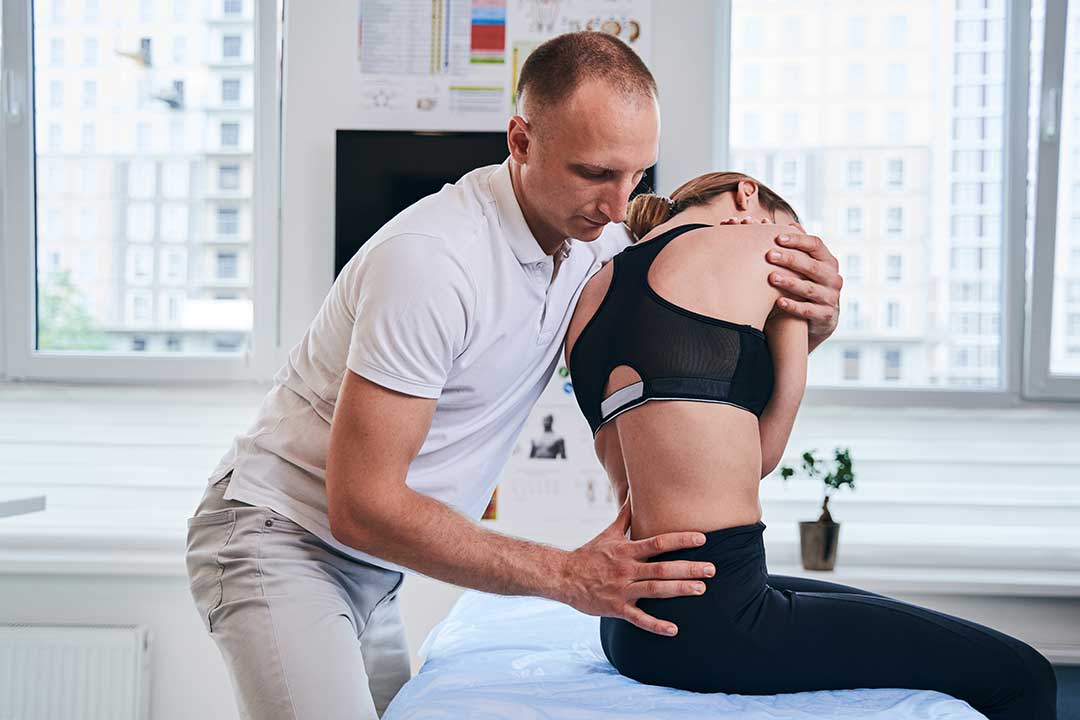
A responsible approach includes:
- Reviewing medical history before treatment
- Screening for red-flag symptoms
- Using the least forceful technique likely to be useful
- Explaining expected reactions
- Monitoring response over time
- Adjusting or stopping care if symptoms worsen
Neck manipulation deserves particular attention because the neck contains important blood vessels and neurological structures. Severe or unusual headache, sudden neck pain, vision changes, facial weakness, difficulty speaking, loss of coordination, or one-sided weakness requires emergency evaluation rather than chiropractic treatment.
What can patients do between visits?
The benefits of conservative care are more likely to last when mobility is supported at home. A practical routine may include short walks, gentle range-of-motion exercises, sit-to-stand practice, and light strengthening that matches current ability.
Progress should be gradual. Someone who has been inactive may begin with several brief movement periods throughout the day rather than attempting a long workout immediately.
Useful habits include:
- Change position regularly instead of sitting for long periods.
- Use stable footwear with nonslip soles.
- Keep walkways well lit and free of loose rugs or clutter.
- Warm up before more demanding activity.
- Stop an exercise that causes sharp, radiating, or progressively worsening pain.
- Track which movements improve function and which consistently provoke symptoms.
For residents in Bolingbrook, indoor walking and home-based exercises can be practical during severe winter weather. During warmer months, outdoor walking may provide an easy way to build endurance, provided surfaces are even and footwear is secure.
When is another evaluation needed?
Chiropractic care is most appropriate for many mechanical, musculoskeletal complaints, but not every symptom comes from the spine or joints.
Prompt medical evaluation may be needed for:
- Unexplained weight loss or fever
- New bowel or bladder problems
- Progressive muscle weakness
- Numbness that is spreading or severe
- Chest pain or shortness of breath
- Pain after a significant fall
- Suspected fracture
- Sudden severe headache or neurological changes
- Pain that does not improve or steadily worsens
A chiropractor can also coordinate care or recommend additional evaluation when symptoms fall outside the scope of conservative musculoskeletal treatment.
Healthy aging is supported by maintaining movement, strength, balance, and confidence in daily activities. Chiropractic care can be one part of that process when it is based on a careful examination, realistic goals, appropriate techniques, and regular attention to safety.